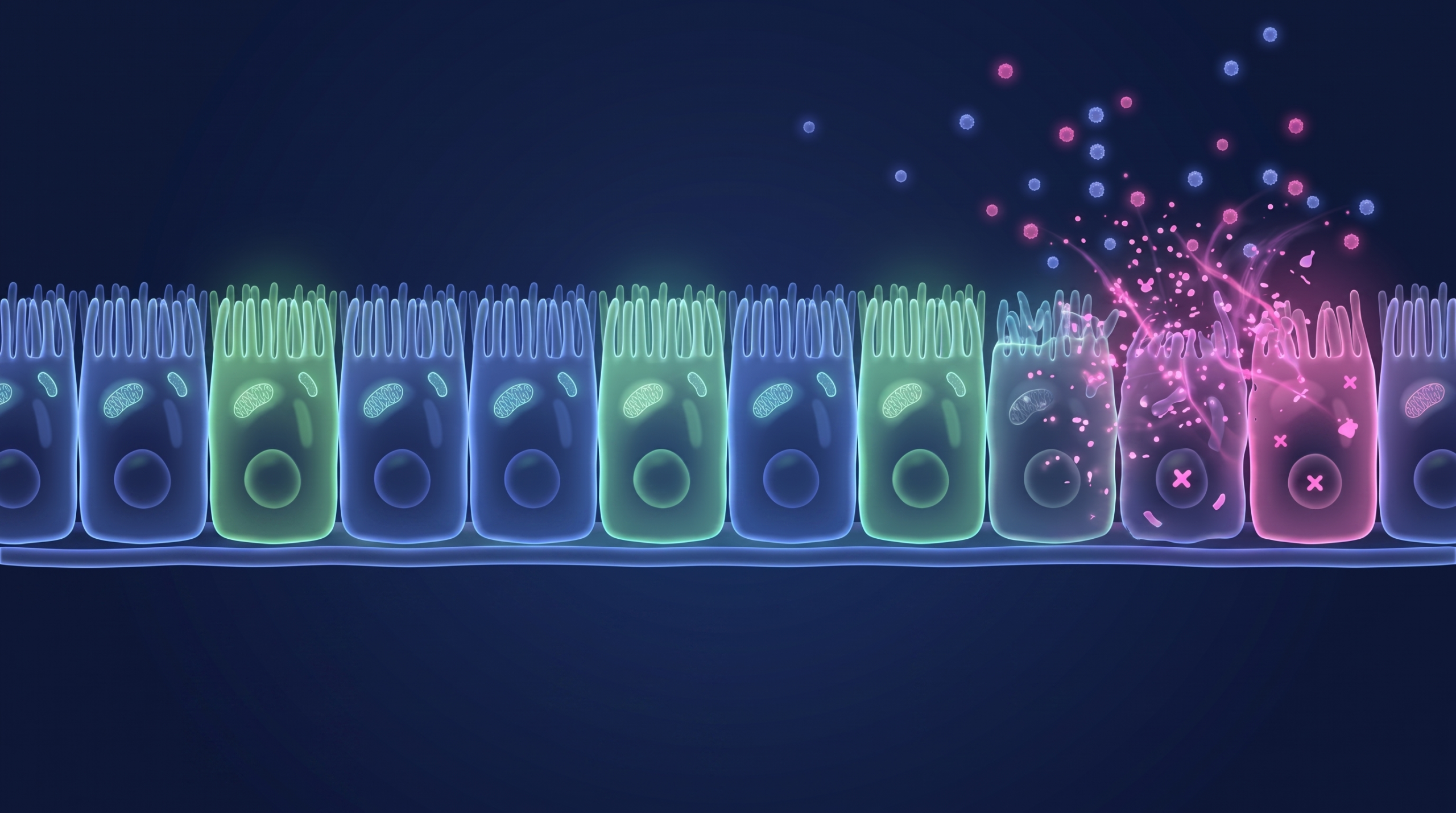
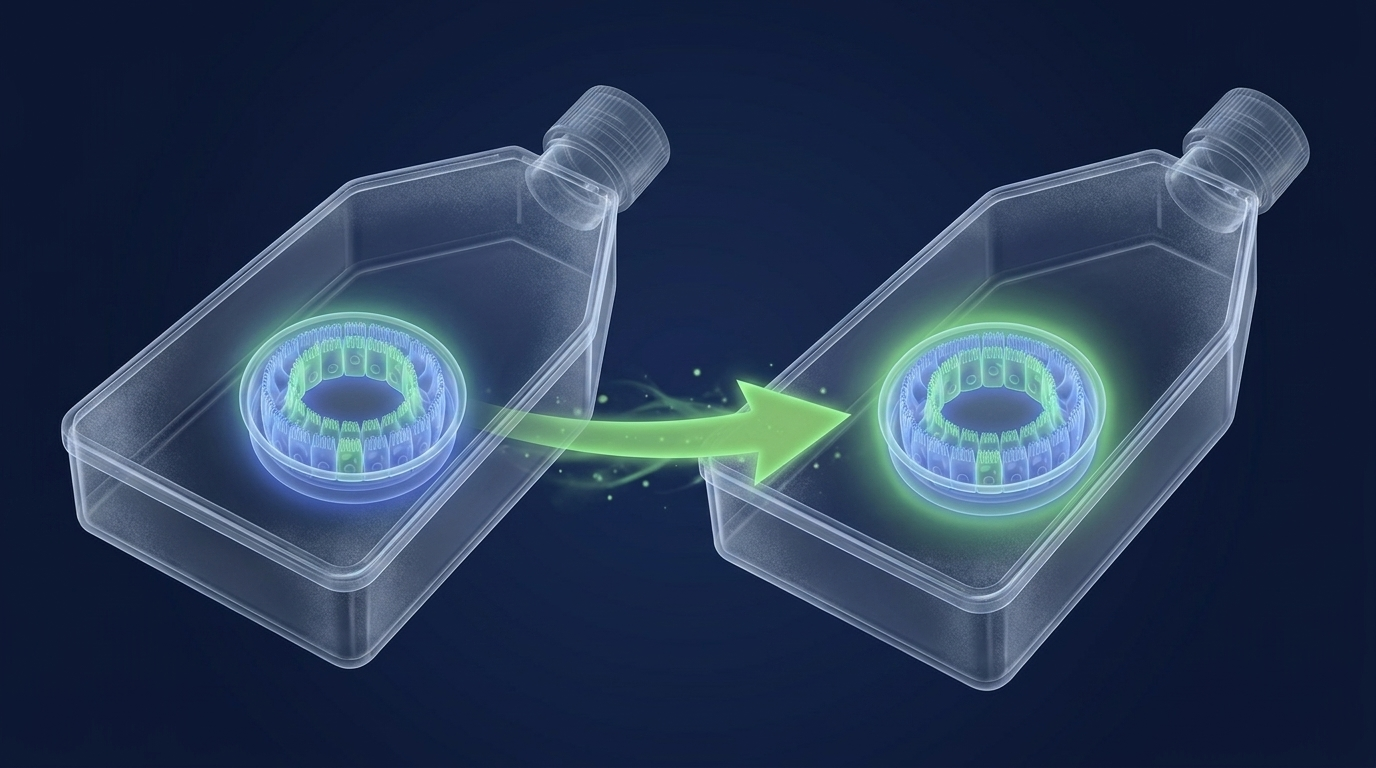
Some of the most damaging variability in a gut assay never involves the drug at all. It lives between neighboring wells on the same plate, seeded from the same batch, run on the same day. When that scatter is large enough, it swallows the effect you are trying to measure, and a real result and a null result start to look the same. Well-to-well variability is unglamorous, it is process rather than biology, and it is where a lot of otherwise good experiments quietly go wrong. The good news is that it is also the most controllable source of noise in the whole system.
Let me be concrete about where it comes from and how you shut it down.
Even the incumbent model is noisy within a single lab
It helps to know the baseline. Caco-2, the immortalized line most people treat as the stable reference, is not as steady as its reputation suggests even inside one laboratory. When ten labs ran the same compounds, the values within a single lab still swung by as much as 16-fold, before any comparison between labs. That is the within-lab number, the one that should be tightest.
The lesson is not that Caco-2 is uniquely bad. It is that process noise is real in every monolayer system, the incumbent included, and it does not announce itself. It hides inside your error bars and inflates them until a two-fold drug effect cannot be distinguished from handling. If you do not control it deliberately, it controls you.
The three places the noise gets in
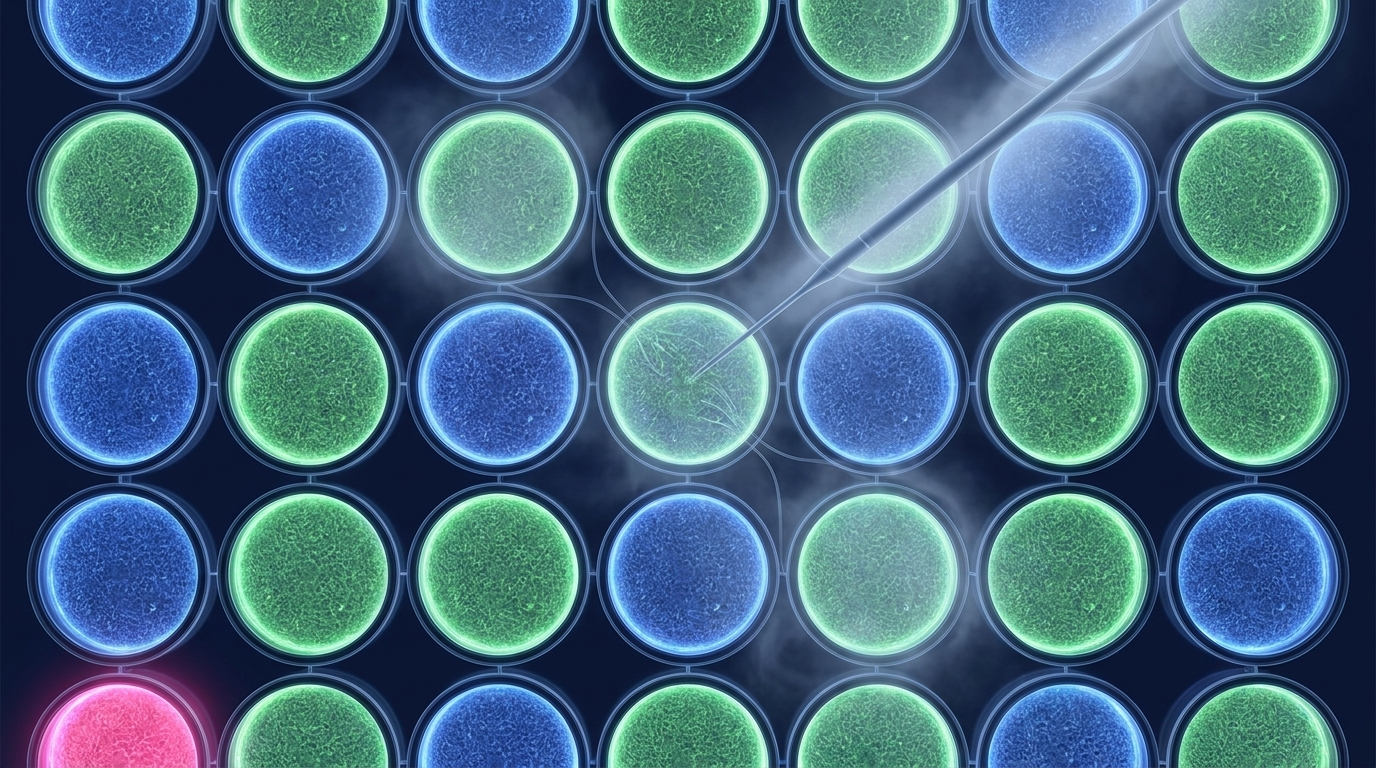
Well-to-well scatter has a short list of usual suspects, and each has a fix.
Seeding is first. If cells are not evenly suspended when they are dispensed, some wells start denser than others, and the difference propagates through the whole experiment. The fix is unglamorous and non-negotiable: keep the suspension genuinely mixed while plating, because cells settle faster than people expect and the last wells filled are not the same as the first.
Confluence is second. A monolayer that has not fully closed leaks, and a leak reads as permeability whether or not the drug is permeable. Wells that reach confluence at different times are not comparable, so timing the assay to a confluence gate rather than to the calendar is what keeps the comparison honest.
Barrier integrity is third, and it is the one that catches the other two. Transepithelial electrical resistance, or TEER, is a fast, non-destructive readout of whether a monolayer has actually formed a barrier. Measured before dosing, it flags the well that has not closed properly so you can exclude it up front, rather than discovering it later as an outlier you are tempted to explain away. A pre-dose integrity gate is the single highest-leverage habit in the whole workflow.
Measuring the noise instead of hoping it is small
You cannot control what you do not quantify, so the discipline starts with measuring your own variability rather than assuming it is fine. The standard tool is the coefficient of variation across replicate wells, and for assays that separate a positive from a negative control, the Z-factor formalizes whether the two are cleanly resolvable given the noise. An assay with a healthy Z-factor separates signal from control with room to spare. An assay with a poor one does not, no matter how good the underlying biology is.
Running your controls every plate and watching those numbers over time is how you catch drift before it becomes a wrong conclusion. Reproducibility is not a state you reach and forget. It is a metric you keep an eye on.
| Source of well-to-well scatter | What it looks like | The control |
|---|---|---|
| Uneven seeding | Density gradient across the plate | Keep cells suspended while plating |
| Incomplete confluence | Apparent permeability with no drug | Gate the assay on confluence, not the clock |
| Un-formed barrier | Outlier wells, inflated error bars | Pre-dose TEER, exclude before dosing |
| Undetected drift | Controls wander week to week | Track CV and Z-factor every run |
Why the model design matters, not just the technique
Technique carries a lot of this, but the model has to cooperate. A system built for consistency reduces the number of ways a well can go wrong: cells that attach and reach confluence reliably, a format that supports a clean barrier-integrity read, and a defined confluence window so the assay is timed to the biology rather than to convenience. Those are design choices, and they are part of why reproducibility is built into RepliGut® rather than left entirely to the bench.
Well-to-well control is the run-level layer of a larger discipline. It sits alongside the batch-level question of lot release and the statistical question of what actually counts as a replicate, all of it feeding a primary-cell model you can trust. It matters most in the applications where a leaky monolayer masquerades as a result, which is exactly the risk in intestinal permeability work and in barrier-integrity readouts for inflammation.
The drug effect you are chasing is often smaller than the process noise you are ignoring. Close the gap between wells first, and the biology gets a great deal easier to see.