
A Human Intestinal Epithelial Model in a Dish.
RepliGut® Planar grows primary human donor stem cells into a flat, polarized epithelium in a standard transwell. Reproducible human gut biology, with apical and basal access, ready in about a week.
The human gut epithelium, rebuilt on your bench
RepliGut® Planar is a human intestinal epithelial model built from primary adult donor stem cells. The cells differentiate into a single polarized monolayer on a permeable membrane. It forms tight junctions, a defined apical surface, and an open basal compartment. You get real human gut biology in the same multiwell transwell format your assays already use.
Because it is a two dimensional layer rather than a sealed sphere, you can dose one side and sample the other. That mirrors how absorption, secretion, and barrier function actually work in the body, and it is something organoids cannot easily do.
Reproducible biology beats a moving target
Organoids grow in three dimensions as closed spheres with uneven shapes and inconsistent surface areas. That makes robust, repeatable assays hard to build and hides the apical surface inside the sphere. RepliGut® Planar uses the same starting cells and lays them flat, so every well presents the same accessible, measurable epithelium.
Consistent geometry
A flat monolayer of uniform area, so replicates line up and assays reproduce well to well.
Both surfaces open
Apical and basal compartments stay accessible for dosing, sampling, and transport studies.
TEER barrier control
Transepithelial resistance confirms a tight, intact barrier before and after each incubation.
Familiar workflow
Runs in 96, 24, and 12 well transwell plates, so it drops into existing lab methods.
A human alternative to the Caco-2 monolayer
Caco-2 has been the default intestinal epithelial model for decades. Yet it comes from a single colon tumor, so it carries the wrong enzyme and transporter profile and speaks for only one region. RepliGut® Planar keeps the familiar transwell workflow and adds the human biology Caco-2 leaves out.
| Feature | Caco-2 | RepliGut® Planar |
|---|---|---|
| Cell source | One colon cancer cell line, single donor genetics. | Primary human adult donor stem cells, from many donors. |
| Regional identity | Colon tumor origin only, no regional range. | Duodenum, jejunum, ileum, and colon, each retained. |
| Time to a monolayer | Roughly 21 days to reach a usable barrier. | A polarized, differentiated epithelium in 7 to 8 days. |
| Cell diversity | Enterocyte like cells only. | Enterocytes, plus goblet and enteroendocrine lineages. |
| Metabolism and transport | Low CYP3A4, altered efflux, non human esterase profile. | Functional CYP3A4 and UGT, active P-gp and BCRP efflux. |
| Mucus layer | None, so it can overpredict absorption. | MUC2 goblet cells and a real mucus layer. |
Human relevant models also match where regulators are heading. The FDA now actively advances New Approach Methodologies for preclinical testing.
One intestinal epithelial model, many questions
The same RepliGut® Planar epithelium supports absorption, safety, and disease work. Pick the application your program needs, or combine them on one human tissue platform.
Predict absorption and metabolism
Measure permeability, efflux, and intestinal first pass on human tissue, across regions and donors.
Explore DMPKFlag gut toxicity early
Screen compounds for drug induced GI injury before it derails a program, with StemTox safety readouts.
Explore StemToxModel IBD and immune response
Challenge the epithelium with cytokines like TNF-alpha and IFN-gamma to study inflamed gut biology.
Explore IBDTrack barrier integrity
Follow TEER and permeability as the epithelium responds to compounds, formulations, and stressors.
See all applications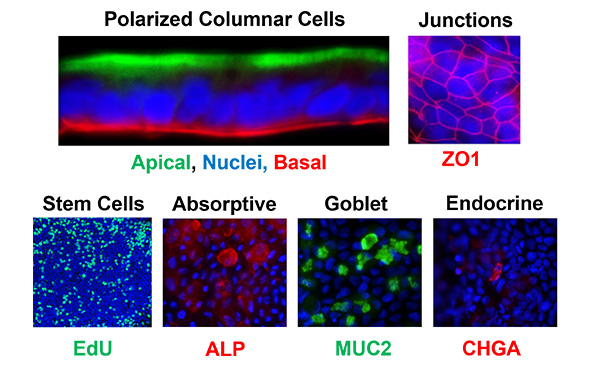
All the major cell lineages, in physiologic ratios
RepliGut® Planar is a polarized monolayer that expresses tight junction proteins and differentiates into the key epithelial cell types found in vivo. That includes absorptive enterocytes, mucus producing goblet cells, and hormone secreting enteroendocrine cells.
Because the model rebuilds native cell diversity rather than a single tumor phenotype, the data reflects how the human gut actually behaves.
See gut hormone research
Enzyme and transporter expression Caco-2 cannot match
RNA sequencing shows RepliGut® Planar expressing critical ADME genes well above Caco-2. That spans Phase I oxidation, Phase II conjugation, and the P-gp and BCRP efflux transporters.
Because the enzymes and carriers are present and active, first pass and transport predictions reflect the real gut instead of a tumor line.
See the publicationsExtend the platform when your question grows
RepliGut® Planar is the foundation. When a program needs proliferation biology or an immune compartment, two related models build on the same primary cell platform.
RepliGut® Crypt and Immune Co-Culture
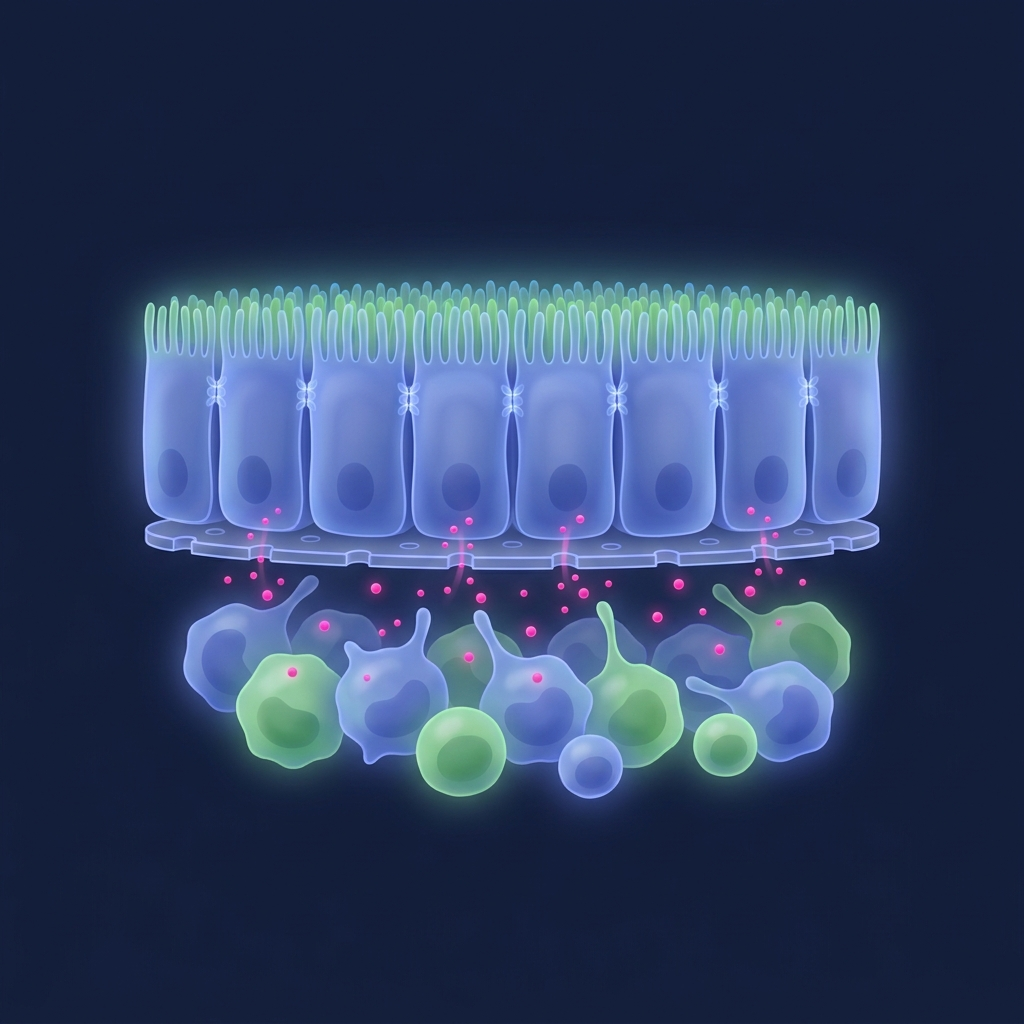
Study the stem cell driven crypt with RepliGut® Crypt. Or add immune cells beneath the epithelium with RepliGut® Immune Co-Culture to model epithelial and immune crosstalk.
Run it in your lab, or have us run it
RepliGut® Kits
Build the intestinal epithelial model on your own bench. Kits ship in 96, 24, and 12 well formats, complete with cells, plates, media, and technical support.
Explore kitsFull-service studies
Have our PhD level scientists design and run the study on human tissue. You get the data, ready for your model, without setting up the platform.
Explore servicesWant the full picture first? Browse the RepliGut® platform overview or the applications hub.
Bring a human intestinal epithelial model into your program
Tell us your region, format, and question. We will help you design the right RepliGut® Planar study.
Talk to our scientists