
Human In Vitro GLP-1 Models.
Caco-2 has no L-cells and cannot release GLP-1. RepliGut® gives you real human enteroendocrine cells that secrete it on cue, so your data reflects human biology.
Discuss your GLP-1 studyExplore the platformWhy GLP-1 is hard to model
GLP-1 based drugs reshaped metabolic medicine. Yet most lab models cannot study the hormone where it is made. Human in vitro GLP-1 models close that gap by using real human intestinal tissue.
GLP-1 comes from enteroendocrine L-cells in the gut lining. Caco-2, the DMPK workhorse, is a colon cancer line of enterocytes. It carries no L-cells, so it cannot secrete GLP-1 at all. Engineered secretory cell lines can release hormone, but their behavior drifts from normal human biology.
Mouse tissue does contain real L-cells. Even so, human and mouse enteroendocrine cells differ in their hormones and receptors. To predict a human response, you need a model built from human cells.
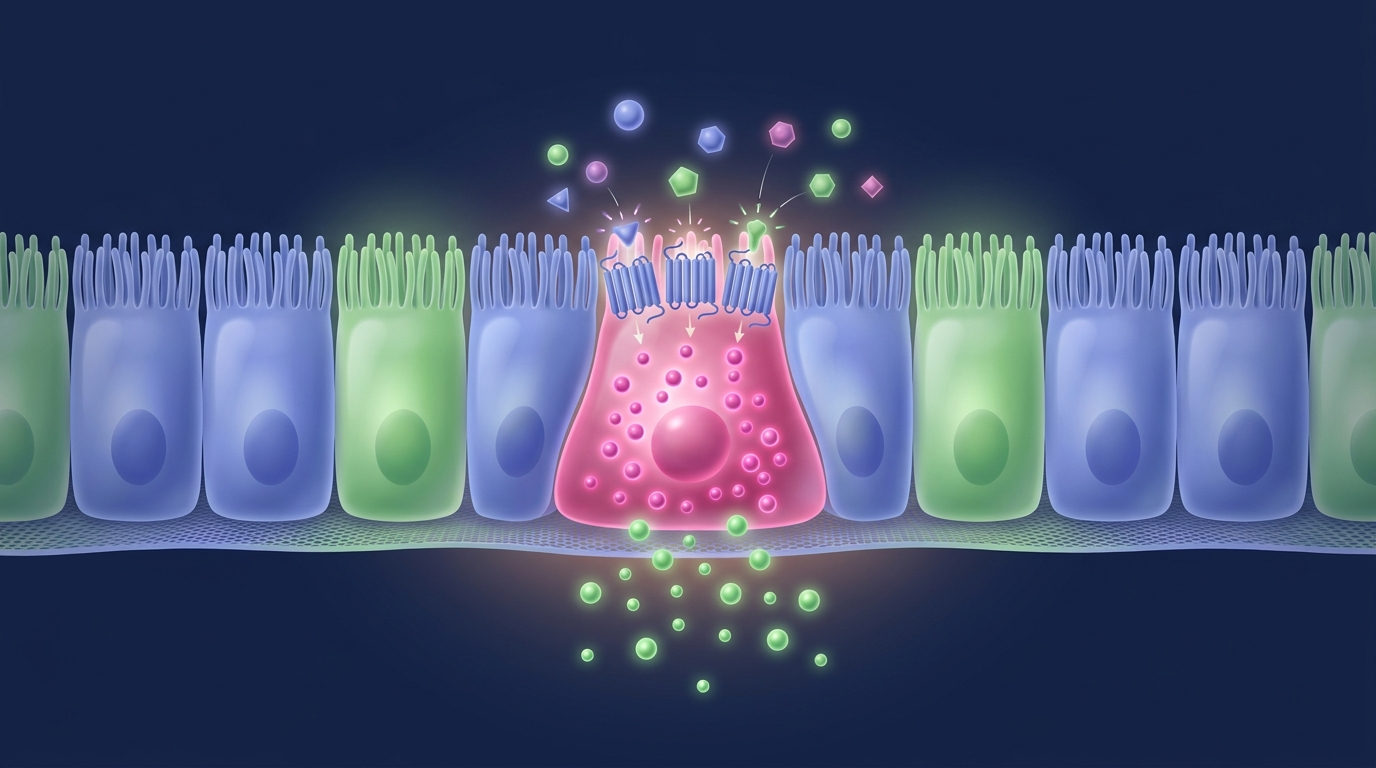
A tunable human enteroendocrine model
RepliGut® starts from primary human intestinal stem cells. It builds a flat, polarized epithelium with the real cell types of the gut, including absorptive enterocytes and enteroendocrine cells.
By adjusting culture conditions, you can enrich L-cells and raise GLP-1 output. Those same L-cells co-secrete PYY, so the platform is positioned to study the wider incretin and gut hormone axis. One model can grow with your program. Explore it across our human intestinal Applications, or have our scientists design a custom study with you.
Explore RepliGut® PlanarLegacy models vs human L-cell biology
The differences are not cosmetic. Whether the cells even make GLP-1, and how faithfully they secrete it, changes what your assay can tell you.
Human and mouse enteroendocrine cells differ in their hormones and receptors. Enteroendocrine cells are now direct drug discovery targets, so those species gaps matter. A model built from real human L-cells removes the guesswork, because it measures the human response directly.
See our published work| What matters | Legacy models | RepliGut® human models |
|---|---|---|
| Do the cells make GLP-1? | Caco-2 is enterocyte-only, with no L-cells, so it cannot secrete GLP-1 | Real human L-cells that release GLP-1 on stimulation |
| Secretion behavior | Engineered secretory cell lines can release hormone abnormally and drift over passage | Primary human epithelium with physiological, stimulus-coupled release |
| Species relevance | Mouse enteroendocrine hormone profiles and receptors differ from human | Human donor tissue with human nutrient-sensing and receptor biology |
| Hormone repertoire | A single engineered readout, detached from normal gut biology | Human L-cells that co-secrete GLP-1 and PYY within a full enteroendocrine lineage |
| Sampling access | Hard to dose and read the apical and basal sides separately | Polarized monolayer with independent apical dosing and basal readouts |
| Throughput & donors | Low throughput from a single or cancer-derived source | Screening scale across multiple human donors in a 96-well format |
What human GLP-1 models let you study
Measure GLP-1 release
Quantify stimulus-evoked secretion by ELISA from the basal compartment.
Screen secretagogues
Test nutrients and compounds, such as bombesin and L-lysine, for a GLP-1 response.
Study co-secreted hormones
Look at PYY alongside GLP-1, released from the same human L-cells.
Dose apical, read basal
Apply compounds to the lumen and capture hormone release on the basal side.
Enrich L-cells on demand
Tune culture conditions to raise enteroendocrine cell numbers for stronger signal.
Compare regional biology
Model duodenum, jejunum, ileum, and colon from human donor tissue.
Capture donor variability
Test hormone response across diverse human donors to gauge real-world range.
Run at screening scale
Work in a 96-well format built for compound screening and dose response.
GLP-1 momentum meets the shift to human models
GLP-1 based therapies are among the most important drugs in metabolic disease. Interest now reaches oral agents and molecules that boost the body's own GLP-1. Both approaches need a human system that secretes the hormone.
At the same time, the FDA and NIH are steering research away from animal testing toward New Approach Methodologies. Human, physiologically accurate platforms fit both trends at once.
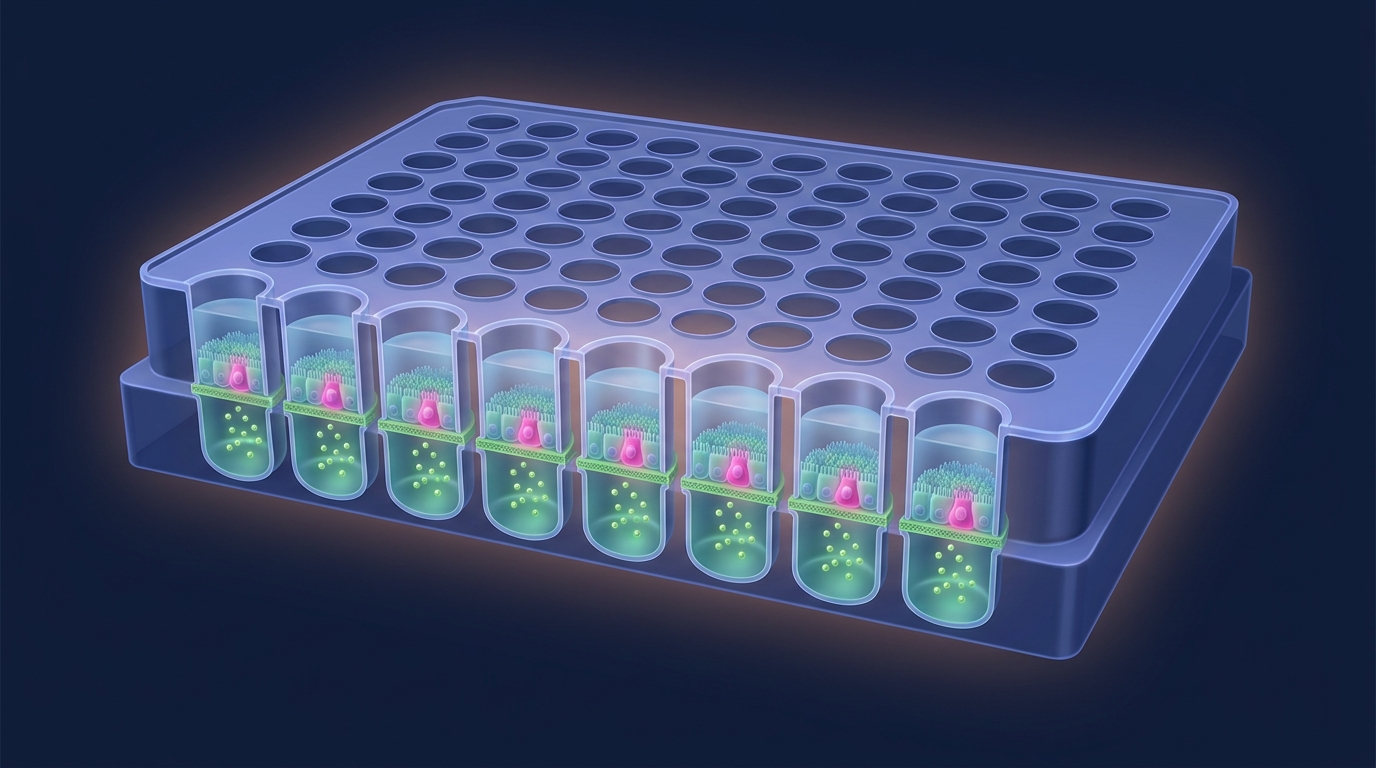
Pair GLP-1 work with human DMPK
Oral GLP-1 programs live or die on absorption and metabolism. RepliGut® also powers permeability, transporter, and metabolism studies in the same human tissue system, so one platform carries the program.
Explore In Vitro DMPKReady to measure GLP-1 in human tissue?
Tell us what you want to learn about gut hormone secretion, and we will help you build the right in vitro GLP-1 model for your program.
Talk to our team