
Human In Vitro IBD Models.
Mouse models miss the biology that drives human IBD. RepliGut® gives you human gut tissue that reflects it, so your discoveries translate.
Discuss your IBD studyExplore the platformWhy IBD drug discovery keeps failing
For decades, IBD drug discovery has leaned on mouse models. Rodents mimic some inflammatory pathways. But they cannot reflect the genetic, immune, and microbiome interactions that drive human disease.
The result is a high clinical failure rate. Drugs that look effective in animals often fail in patients. To close that gap, researchers need predictive, human-relevant in vitro IBD models that replicate the intestinal environment of the disease.
Mouse models vs human in vitro IBD models
The differences are not cosmetic. Mouse and human guts run on different immune and epithelial biology, and that changes what a drug actually does.
In preclinical models, blocking IL-17 looked like a promising way to calm gut inflammation. In a human Crohn's disease trial, the anti-IL-17A antibody secukinumab failed to help, was linked to more adverse events, and showed signs of worsening disease, so the study was stopped early. IL-17 turns out to help protect the human gut barrier, a human-specific role the animal models never revealed.
Read the trial| What matters | Mouse models | RepliGut® human models |
|---|---|---|
| Immune & epithelial biology | Mouse Paneth cells secrete over 20 alpha-defensins; humans secrete two, and neutrophil biology differs | Human epithelium with human defensin, cytokine, and barrier biology |
| How disease is created | Forced with chemicals or single-gene knockouts that no patient actually has | Human donor tissue that reflects real human variation |
| Microbiome & immune makeup | A different microbiome and different immune cell ratios than humans | Human epithelium you can challenge with human-relevant signals |
| Human repair biology | Miss human regeneration such as YAP and Wnt dynamics | Observe human intestinal repair directly with RepliGut® Crypt |
| Clinical translation | Efficacy in rodents frequently fails to reach patients | Built from human tissue to predict the human response |
| Throughput & donors | Low, slow, and hard to vary | High-throughput screening across multiple human donors |
What in vitro IBD models let you measure
Assess barrier integrity
through TEER and permeability measurements.
Model inflammatory responses
with cytokines like TNF-α, IFN-γ, and IL-1β.
Test drug mechanisms of action
on barrier repair, inflammation, and epithelial health.
Capture donor-to-donor variability
to evaluate treatment-response diversity.
Compare regional differences
across duodenum, jejunum, ileum, and colon.
Investigate epithelial-microbiome interactions
with microbial metabolites and bacterial components.
Study wound healing
to track epithelial restitution after injury.
Discover biomarkers
of disease progression and therapeutic efficacy.
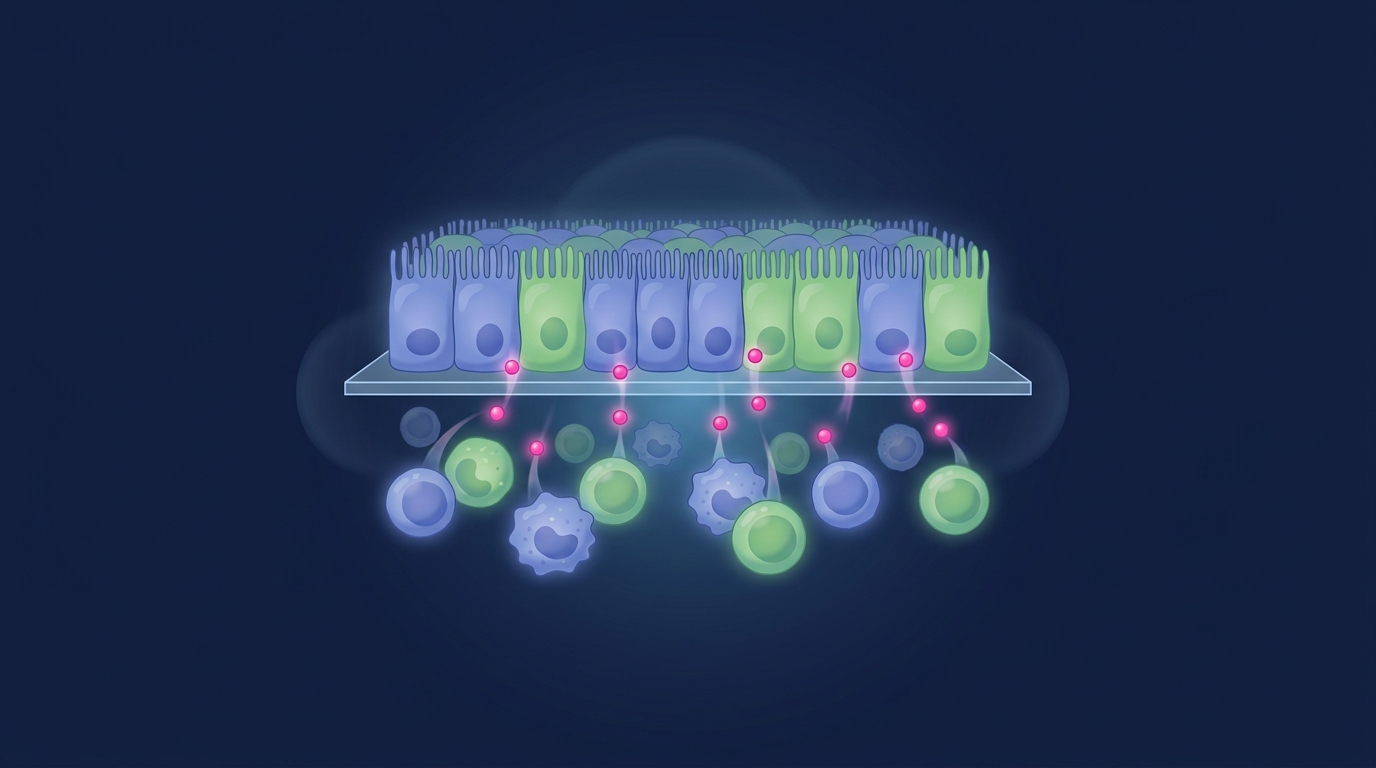
Add immune cells with RepliGut® Immune Co-Culture
IBD is driven by immune-epithelial cross-talk. RepliGut® Immune Co-Culture places human immune cells beneath the epithelium, so you can study that interaction directly. It is one of the most popular starting points for our IBD customers.
Explore Immune Co-CultureWhy in vitro IBD models matter now
In 2025, the FDA and NIH announced a shift away from animal testing toward New Approach Methodologies (NAMs). NAMs include human-relevant assays, organ-on-chip systems, and advanced in vitro models.
For a disease like IBD, animal models often miss the mark. That shift makes human, physiologically accurate platforms essential.
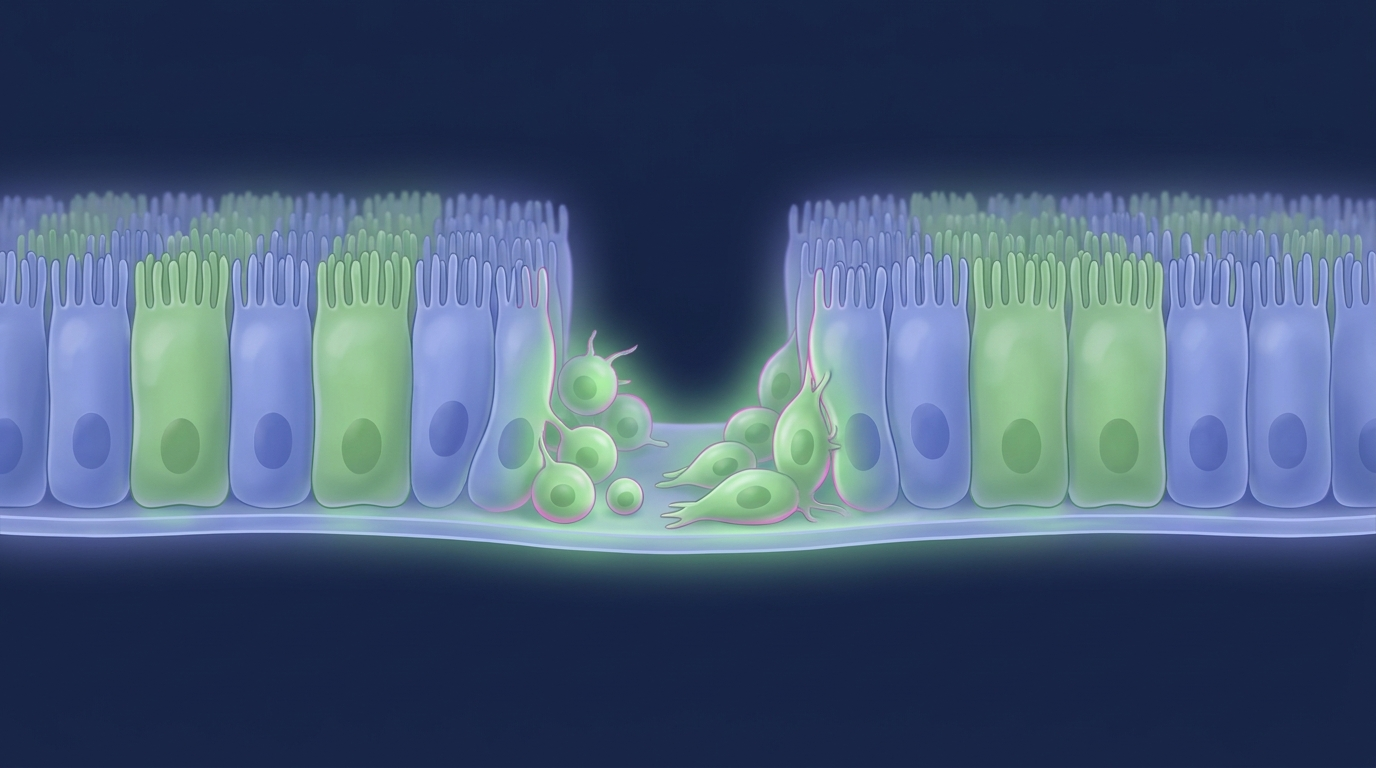
Modeling human intestinal repair
A central challenge in IBD is how the gut heals itself: stem cell activation, epithelial regeneration, and immune-epithelial cross-talk. Animal models miss human-specific processes, such as YAP and Wnt signaling dynamics and cellular plasticity during regeneration.
With RepliGut® Crypt, you can directly observe and manipulate human intestinal regeneration, including fetal-like dedifferentiation and epithelial restitution. These are phenomena that animal models cannot reproduce.
Explore RepliGut® CryptKits or full-service IBD studies
RepliGut® Kits
Run human IBD models in your own lab, complete with cells, plates, media, and technical support.
Explore kitsFull-service studies
Have our scientists design and run the study, from inflammation induction to barrier and repair readouts.
Explore servicesReady to model IBD in human tissue?
Tell us what you are trying to answer, and we will help you build the right in vitro IBD model for your program.
Talk to our team