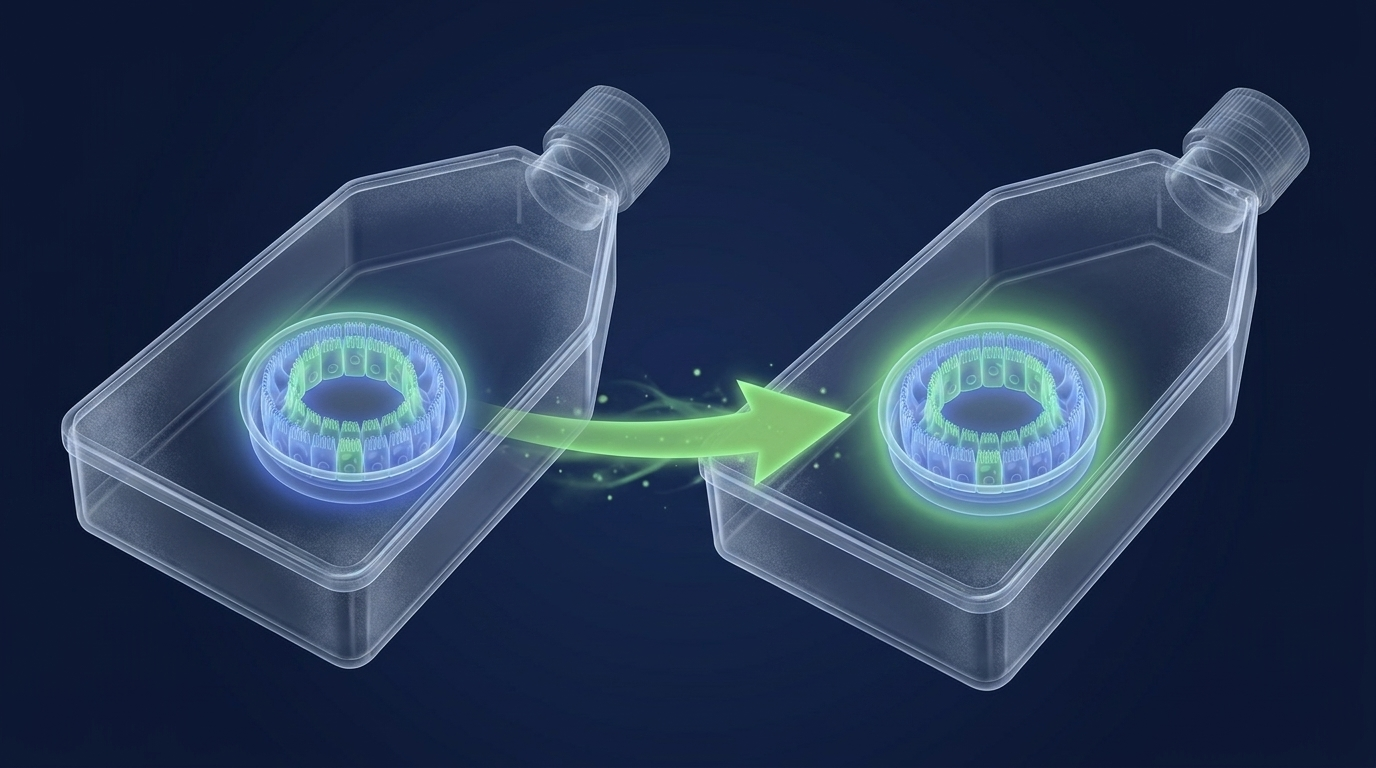
Most conversations about model reproducibility skip past the least glamorous part, which is also the part that decides the outcome. Before you dose a single compound, before any donor biology enters the picture, a batch of cells either performs or it does not. Lot-to-lot variability is where a lot of preclinical trouble starts. Lot release testing is the quiet discipline that keeps it from reaching your bench. It is worth understanding what that testing does. Get it right and you have a kit you can build a program on. Miss it and you have one that surprises you at the worst moment.
Let me start with why this matters more than it looks like it should.
The biggest driver of irreproducibility is the biology you start with
In 2015, a PLOS Biology analysis put a number on it. Preclinical research that no one can reproduce costs the United States roughly 28 billion dollars a year. The largest single contributor was not statistics, and not study design. It was biological reagents and reference materials: the cells, the antibodies, the materials themselves. Most reproducibility failures trace back to the starting material.
That finding should change how you shop for a model. The temptation is to scrutinize the assay and wave through the cells, because the cells feel like a given. They are not a given. A batch that clumps, seeds unevenly, or never forms a barrier hands you noise. That noise looks exactly like a drug effect. And no amount of downstream rigor can recover a result the starting material could not support. Cell-line science learned this the hard way, through decades of misidentified and cross-contaminated lines. Primary material carries its own version of the risk, and the answer to it is release testing.
What release testing actually checks
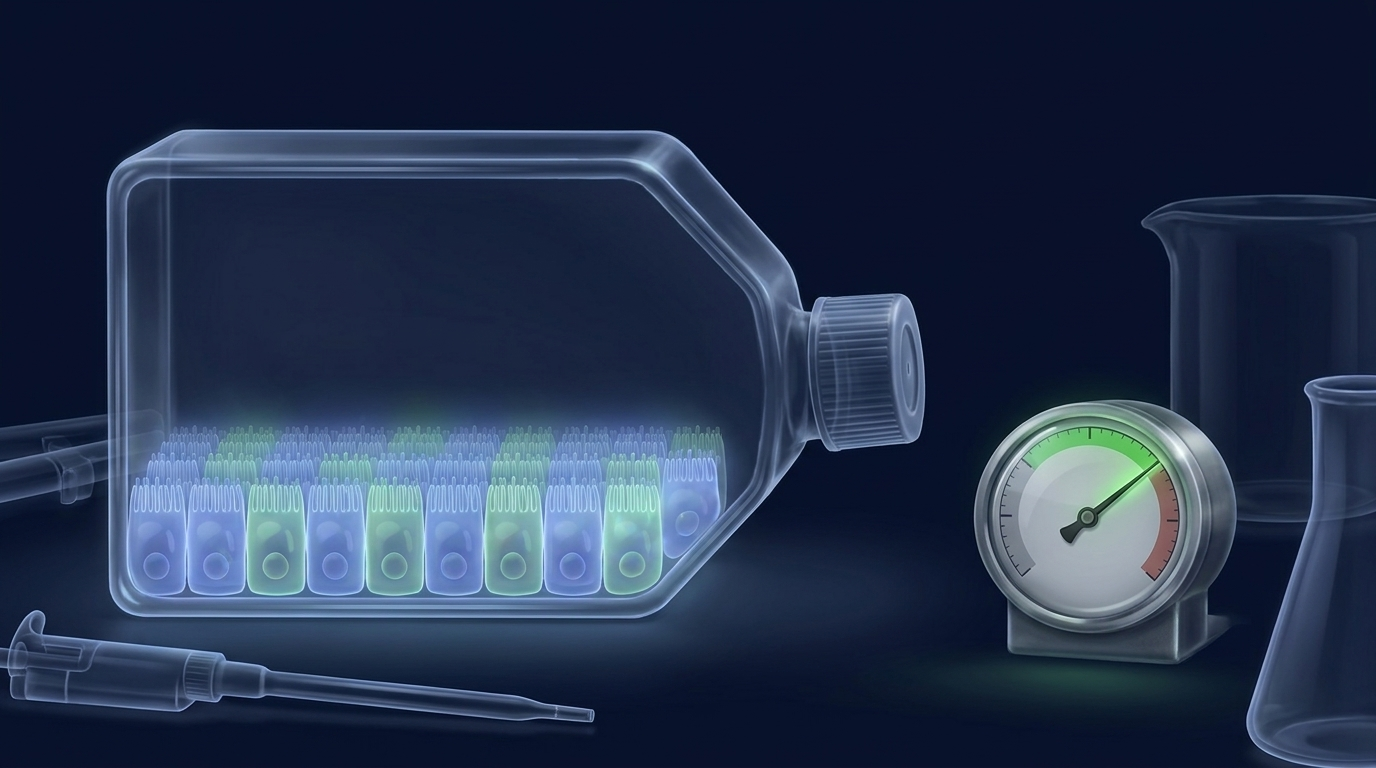
Lot release is a pass-or-fail gate a batch has to clear before it ships. The point is not to prove the cells are perfect. Instead it proves one thing, against criteria the lab fixes in advance. This batch will behave like the last one, within known limits. A serious release process confirms a few things.
First, the cells attach and reach confluence on schedule. A lot that seeds poorly fails before anyone tests the biology. Second, the monolayer forms a real barrier, which shows up as transepithelial electrical resistance crossing a threshold. Barrier integrity is the foundation every permeability and inflammation readout sits on. Third, the expected phenotype is present, so the differentiated functions the model promises actually show up in this batch. Finally, the batch reproduces a defined response, often a dose-response to a reference compound. That demonstrates performance instead of leaving you to assume it.
One thread runs through all of it. The lab sets every criterion before it tests the lot. Either the lot clears the bar or it does not ship. Criteria you invent after the fact are not criteria. They are rationalizations.
Release criteria versus a certificate of analysis
Here is a distinction worth insisting on when you evaluate any kit, ours included. A certificate lists what a batch happened to do. Release criteria are the bars a batch had to meet. The first is a record. The second is a commitment. Ask a vendor which one you are getting.
| What you are handed | What it tells you | What it does not |
|---|---|---|
| Certificate of analysis | What this batch measured | Whether it had to hit a bar to ship |
| Defined release criteria | The batch cleared preset thresholds | The exact per-run values, which still vary within limits |
| Neither | Very little | Almost everything you need to know |
The reason this matters is trust across time. You are not buying one batch. You are building a program that will consume batch after batch. What keeps month six comparable to month one is simple. Every lot in between had to clear the same gate.
The design principle
This is why lot release is a design principle behind RepliGut® rather than an afterthought. Altis releases every batch against set criteria, including barrier integrity and a defined functional response. A lot that will not perform stops at that gate. It never reaches a customer to surface later in their data. That control is what makes the batch-to-batch consistency underneath a long program real rather than hoped for.
Lot release is the batch-level layer of a larger discipline. It sits alongside two other questions: the donor-level question of reading biological variability, and the run-level question of well-to-well consistency. All of it serves one goal: a primary-cell model you can actually trust. It also underwrites the applications that lean on batch consistency most. Those run from permeability and metabolism screening to barrier and inflammation assays. There, a shifting baseline between lots would quietly corrupt a whole study.
The unglamorous part is the part that matters. A model is only as reproducible as the batches it ships. Lot release is where you keep that promise or quietly break it.