Ester prodrug design is an exercise in controlled instability. You start with a molecule that has a real liability: poor solubility, weak permeability, a bitter taste, a short half-life. Then you attach a chemical group that the body will remove at the right time and place. The ester bond is the workhorse of that strategy, because it is easy to install and, in principle, easy for an enzyme to cleave. The hard part is not putting the group on. It is making sure the group comes off where you intended, and nowhere else. That decision hinges on enzymes in the gut. So it hinges on the model you use to see them.
The masking problem
A prodrug is designed around a promoiety, the removable group that carries the parent through its weak spot. Roughly one in ten approved small-molecule drugs uses some version of this trick, according to a holistic analysis of approved prodrugs. For ester prodrugs, the promoiety is cleaved by carboxylesterases, so the whole design is a bet about esterase timing.
The bet has two failure modes. Cleave too early, in the lumen or the gut wall, and the parent is unmasked before it is absorbed. The benefit you engineered in is gone. Cleave too late, or not at all, and the active drug never appears. Good ester prodrug design threads that needle: stable enough to survive the intestine, labile enough to activate at the target. The tissue in between, the human gut, is where the design succeeds or fails.
The esterase you design around
Which esterase matters depends on where you want activation to happen. A prodrug meant to cross the intestine intact and activate systemically, often by CES1 in the liver, needs to resist the enzymes it meets on the way. A prodrug meant to act locally can be built as a CES2 substrate. And because CES1 and CES2 sit in different tissues, the choice of linker is really a choice of enzyme. CES2 dominates the human small intestine and CES1 the liver, so the linker decides which one, in which compartment, does the work.
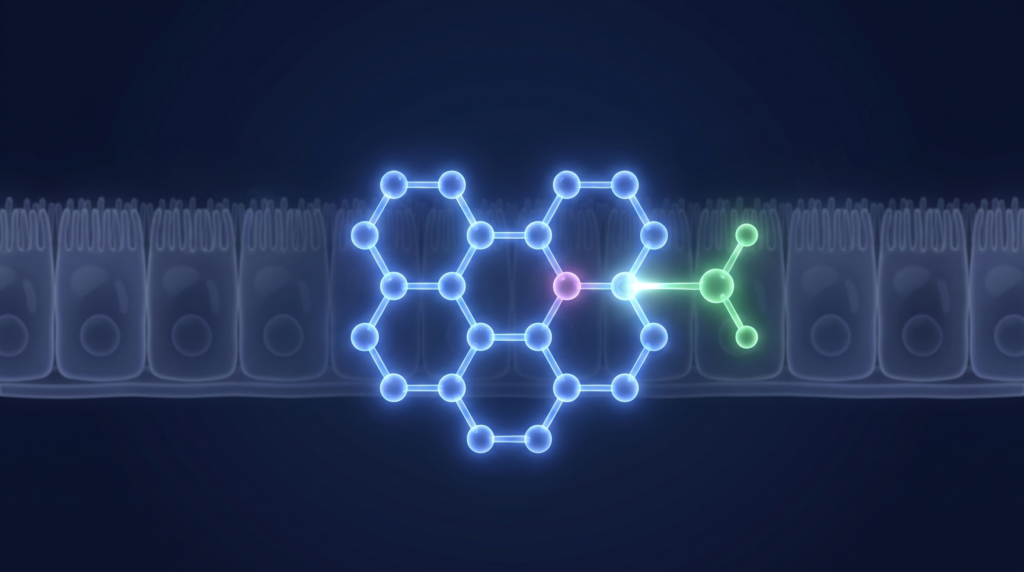
Medicinal chemists tune this deliberately. Recent work has engineered carbamate-linked prodrugs that resist premature hydrolysis in the intestine while staying available for activation later. The point is to control exactly where the promoiety comes off. That is the design lever at its most refined: shaping the linker so the enzyme profile of the gut does not undo the molecule before it is absorbed.
The model shapes the molecule
Here is the part that should give any prodrug program pause. You optimize a molecule against what you can measure. If the assay that reports intestinal stability carries the wrong esterases, you will select for the wrong property.
Caco-2, the standard permeability screen, expresses CES1, which human enterocytes do not, and lacks CES2, which they do. So an ester prodrug tested there faces a liver-type enzyme in the gut compartment and misses the gut-type one entirely. A candidate that looks unstable in Caco-2 might be perfectly stable in a real human intestine. A chemist optimizing against that readout could armor the molecule against a threat it will never meet. Worse, they could drop a good compound for failing a test that does not reflect its biology. When the model has the enzymes backward, the structure-activity relationship it teaches you is backward too.
| Design goal | The enzyme question | Why the model matters |
|---|---|---|
| Survive the intestine intact | Resist intestinal CES2 hydrolysis | A CES2-null model cannot show intestinal cleavage |
| Activate systemically | Cleaved by CES1, mostly in the liver | Caco-2’s CES1 cleaves it in the gut compartment instead |
| Activate locally in the gut | Handled by CES2 in the enterocyte | Missing CES2 hides the intended activation |
| Rank two linker designs | Relative stability on human tissue | Wrong esterases invert the ranking |
Validate the intent on human tissue
The fix is not more clever chemistry layered on top of a misleading assay. It is testing the design where the human enzymes actually are. RepliGut® Planar is grown from primary human intestinal stem cells. So it expresses the carboxylesterases the way native intestine does, CES2 present and CES1 low. A linker built to survive the human gut can then be checked against the human gut. And first-pass intestinal metabolism reflects the enzyme the molecule will really face. The design intent and the readout finally line up.
Ester prodrug design is ultimately a question of place: where the mask stays on, and where it comes off. That question is answered by the esterases of the human intestine, so it should be tested on them. Design the molecule for the tissue it will actually cross, not for the cancer line that stands in for it. Do that, and the prodrug bioavailability you predict has a much better chance of surviving contact with a real patient.